How to choose a fire hose: types, DIN 14811 and couplings
Which fire hose fits your brigade or site? Compare hose types, DIN 14811 classes, diameters and couplings, and learn how to make a hose last longer.
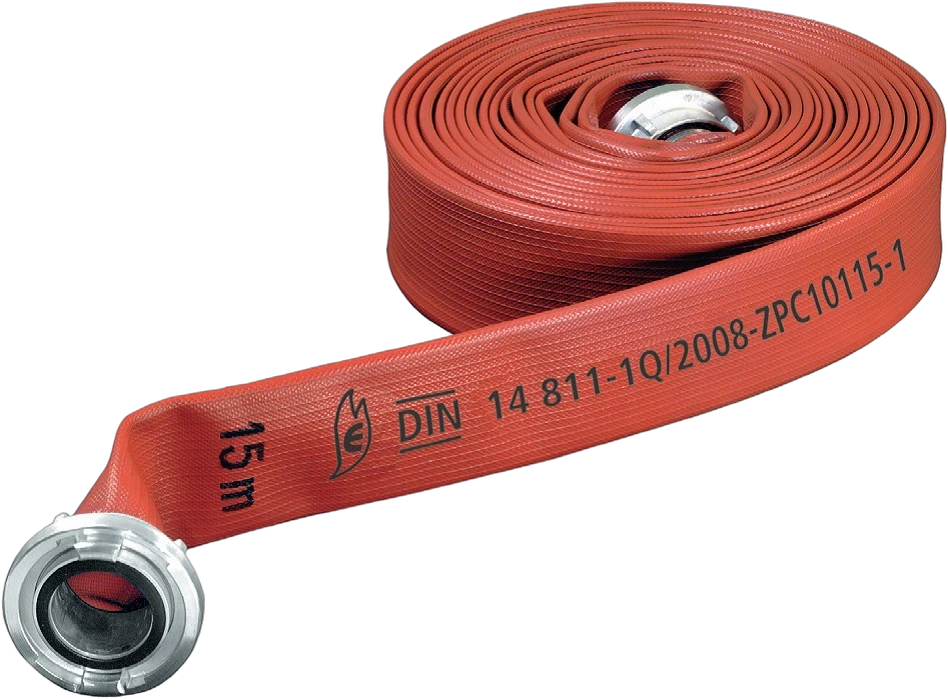
The right fire hose depends on where you use it, the diameter you need, how the jacket is built and which coupling system your equipment already has. A municipal brigade that rolls out hoses every day needs something different from a tank terminal where a hose may lie in fuel or chemicals.
Types of fire hose
Most delivery hoses for firefighting are lay-flat hoses: a woven jacket gives the strength, an inner lining keeps the water in. The differences are in how the outside of the jacket is finished.
- Uncoated woven hose has a polyester jacket with a rubber lining and is light and supple. Our TCZ is a white hose of this type with an EPDM lining.
- Coated woven hose is built the same way, with a coating on the outside of the jacket that protects the fabric against abrasion and dirt. Our TCM has a red PU coating.
- In an extruded hose the jacket is embedded in a single layer of material that forms both the lining and the outer wear layer. DURATEX is a PVC-nitrile hose of this type and resists hydrocarbons, chemicals, fuels and ozone.
- A special attack hose is built for interior attack and the heat that comes with it. FIREATER conforms to NFPA 1961, resists high temperatures and kinking, and takes up a minimum of water.
| Hose | Construction | Standard or rating | Typical use |
|---|---|---|---|
| TCZ | White woven polyester jacket, EPDM lining | DIN 14811 Class 1 | Light, flexible delivery hose |
| TCM | Woven polyester jacket with PU coating, EPDM lining | DIN 14811 Class 2 | Daily use where abrasion matters |
| DURATEX | PVC-nitrile, extruded | Burst pressure 50 bar | Industry, chemicals and fuels |
| FIREATER | Attack hose, heat and kink resistant | NFPA 1961 | Interior attack |
What do the DIN 14811 classes mean?
DIN 14811 is the German standard for delivery hoses used with fire pumps and fire service vehicles, and it is widely used as a reference outside Germany too. It sorts hoses into classes by how the jacket is finished:
- Class 1 is a woven jacket without an outer coating.
- Class 2 is a woven jacket with an outer coating.
- Class 3 is a jacket with a full outer cover, built for the highest abrasion resistance.
A higher class is not automatically the better choice. A Class 1 hose is lighter and more supple, which helps when a crew has to move it by hand. A coated or covered hose earns its extra weight on rough ground and in dirty conditions.
Diameter: 45 or 52 mm, 70 or 75 mm
Two size groups cover most firefighting work:
- 45 or 52 mm for attack lines that a crew carries and moves while fighting the fire
- 70 or 75 mm for supply lines between hydrant, pump and dividing piece
A larger diameter moves more water with less pressure loss, but a charged hose is also heavier and harder to handle. Choose the diameter that matches the flow of your nozzles and the outlets of your pump, not the largest one available. The figures per 100 m are in our article on friction loss in 45 and 70 mm hose.
Which coupling fits: Storz, DSP or Guillemin?
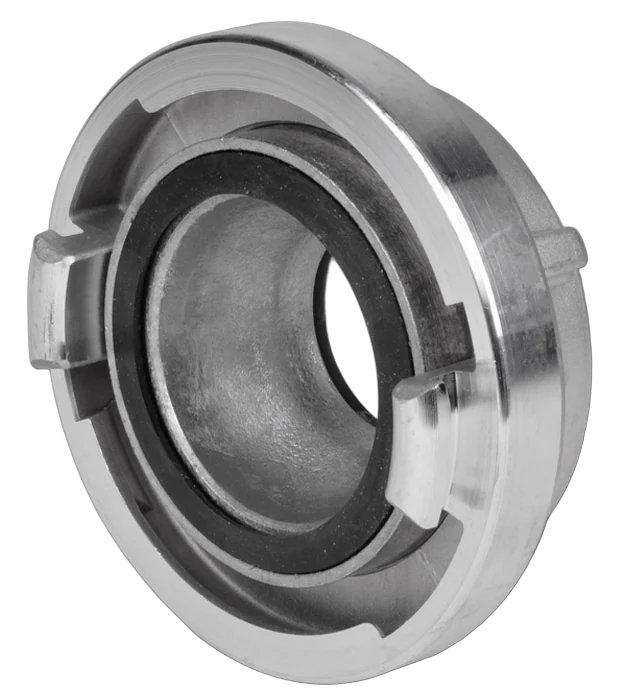
The hose has to connect to what you already own. In the Benelux you will mostly meet three systems: Storz, DSP and Guillemin. All three are symmetrical, so both halves are identical and any two ends of the same system and size connect. The systems do not fit each other without an adapter. Which country uses which system is explained in Storz, DSP or Guillemin.
Check your vehicles, hydrants, standpipes and the equipment of neighbouring units before you order. We supply hoses with the coupling you need and carry Storz, DSP and Guillemin couplings, reducers and adapters for mixed situations.
How do you make a fire hose last longer?
How a hose is treated after use decides how long it lasts, far more than its age.
- Drain the hose and rinse off dirt, foam concentrate and chemicals with clean water.
- Check the jacket for cuts and worn spots, and the couplings and seals for damage.
- Let an uncoated woven hose dry completely before you store it. Coated and extruded hoses take up little water and need far less drying.
- Store hoses away from direct sunlight and re-roll them from time to time, so the folds do not always sit in the same place.
- Pressure-test at the interval that your organisation's rules or the manufacturer prescribe.
Checklist before you order
- Where is the hose used: street, industry, interior attack?
- Can it come into contact with fuels, oils or chemicals?
- Which diameter and length match your pump, nozzles and storage?
- Which coupling system and size do your vehicles and hydrants have?
- Do you need a specific standard or certification, such as DIN 14811 or NFPA 1961?
With the answers to these five questions we can usually recommend a hose in one conversation. Send us your requirements or look at the full range of fire hoses.
Frequently asked questions
What is the difference between DIN 14811 Class 1 and Class 2?
A Class 1 hose has a woven jacket without an outer coating. A Class 2 hose has a coating on the outside of the jacket, which protects it against abrasion and keeps water and dirt out of the fabric. In our range, TCZ is certified to Class 1 and TCM to Class 2.
Which fire hose resists chemicals and oil?
DURATEX. It is an extruded PVC-nitrile hose with a wear layer that resists ozone, chemicals and acids, and it is resistant to hydrocarbons and fuels. That is why it is often chosen for industrial sites and tank terminals.
What is the burst pressure of a fire hose?
That depends on the type: DURATEX has a burst pressure of 50 bar. Always compare the burst pressure and the working pressure on the data sheet with the pressure your pump delivers.
Can I get a hose with DSP or Guillemin couplings instead of Storz?
Yes. DURATEX comes with Storz couplings as standard, and other coupling types are available on request. Belgian Fire Safety supplies Storz, DSP and Guillemin couplings, so we can match the hose to your existing equipment.