Fire hydrants in Belgium: types, signs and the standpipe
Belgium has above-ground hydrants (sign B) and underground hydrants (sign H) used with a standpipe. How to read the sign and what the 1000 l/min rule asks.
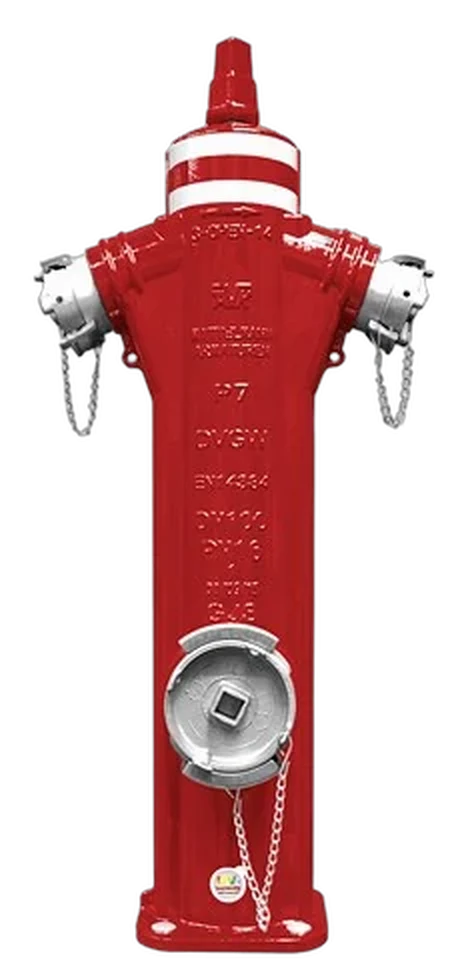
Belgium has two types of fire hydrant on its water network. The above-ground hydrant (bovengrondse hydrant in Dutch, borne d'incendie in French) has fixed outlets with symmetrical couplings and is marked B on signs. The underground hydrant (ondergrondse hydrant, bouche d'incendie) sits under a cover in the pavement, is marked H and needs a standpipe before a hose can be connected. The yardstick for both is the ministerial circular of 14 October 1975: 120 m³ of water spread over two hours, a flow of 1000 l/min.
Above-ground and underground hydrants compared
Both hydrants tap the same pressurised main and differ in where the hose connects. The ministerial circular of 14 October 1975 (in Dutch) names these two as the water connections for firefighting on the network.
| Feature | Above-ground hydrant | Underground hydrant |
|---|---|---|
| Letter on the sign | B | H |
| Hose connection | Symmetrical couplings of the Royal Decree of 30 January 1975 | Bayonet coupling for a standpipe |
| Belgian standard named in the circulars | NBN S 21-019 (BH 100, BH 80, BHc 100, BHc 80) | NBN S 21-034 (underground hydrant Ø 80) |
| European product standard | EN 14384 (DN 80, DN 100, DN 150; PN 16) | EN 14339 (DN 80, DN 100) |
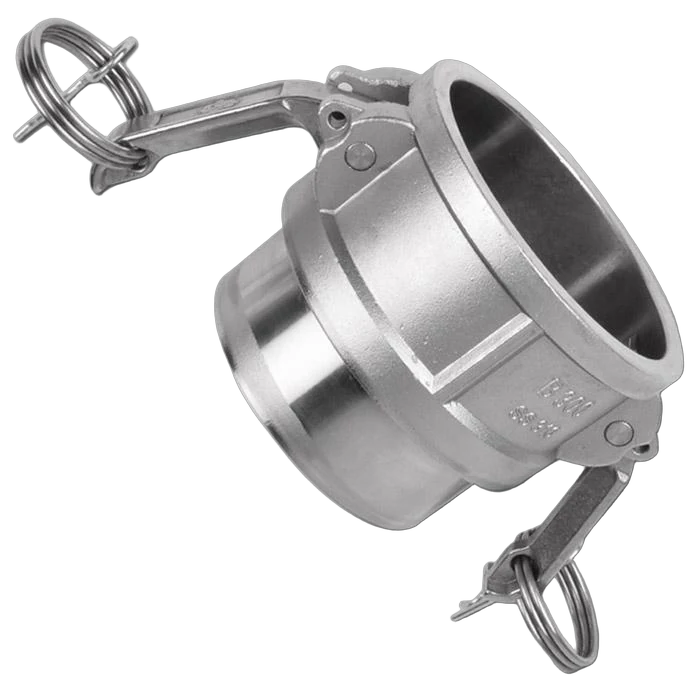
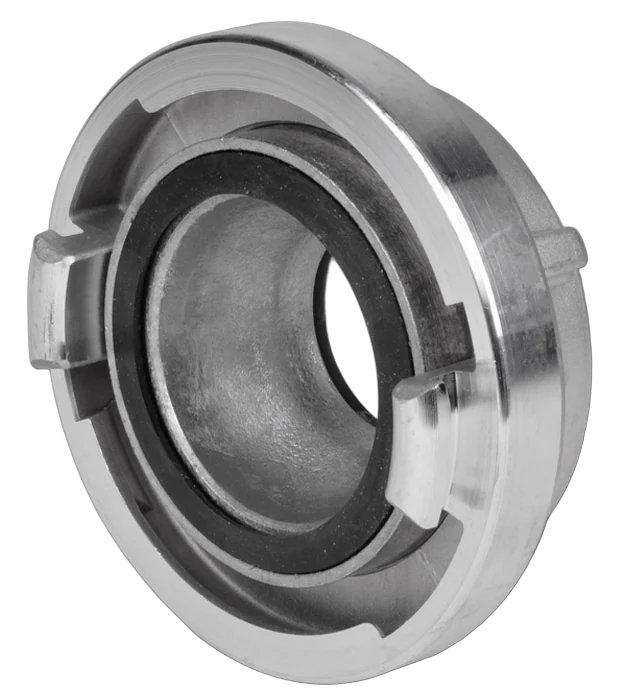
The symmetrical couplings are the types of the Royal Decree of 30 January 1975: the self-sealing coupling sold as DSP in sizes 45 and 70, the AR type and the Guillemin type. EN 14384 and EN 14339 both leave the outlets to national requirements, so a hydrant built for Germany does not automatically take a Belgian hose. Buyers from the Netherlands know both types as "brandkraan", and in France the above-ground hydrant is a "poteau d'incendie".
How to read a hydrant sign
A Belgian hydrant sign tells you the type, the diameter of the water main and where the hydrant is. The annex to the 1975 circular describes sign A11 for the underground hydrant and A12 for the above-ground hydrant. Both are white plates of 250 by 200 mm with a red border and black lettering, hung between 2 and 2.5 m above the ground.
The top line starts with the letter H or B. H stands for "hydrant" and means underground. B means above-ground: the Dutch text of the circular derives it from "brandkraan", the French text from "borne". The number after the letter is the inside diameter in millimetres of the main that feeds the hydrant. "H 100" is an underground hydrant on a 100 mm main.
Below the letter are two distances in metres. Both are rounded up to one decimal. The lower number says how far the hydrant lies out from the face of the sign. The number beside the vertical line is the distance sideways: if it is written to the right of the line, the hydrant is to your right as you face the sign. In the circular's example, "6,1" and "12,1" put the cover 6.1 m in front of the sign and 12.1 m to the right. An above-ground hydrant gets a sign only where it is hard to see or where snow can cover it.
What the main diameter says about the flow
The diameter on the sign lets you estimate what the hydrant can deliver. A rule of thumb comes from the training handout on water supply of Luxembourg's fire and rescue corps CGDIS (in German). An above-ground hydrant gives about 15 times the main diameter in millimetres, in litres per minute, and an underground hydrant about 10 times. On a 100 mm main that is roughly 1500 l/min above ground and 1000 l/min underground.
It is a rule of thumb, no more. The real flow depends on the pressure and the layout of the network. The Belgian circular adds that a network that is not meshed, or mains with an inside diameter under 100 mm, may not reach the required flow. The network then has to be backed up with water from a canal, pond or reservoir.
The rules: flow, distance and checks
The principle of the 1975 circular is 120 m³ of water over two hours at 1000 l/min, which it calls sufficient in most cases. For an isolated building or a small group of isolated buildings with a limited fire risk, the quantity may drop to 60 m³ or even 40 m³. Specific regulations for certain buildings or plants can require more.
The circular also sets distances. In industrial and commercial zones and in densely populated places, hydrants stand at most 100 m apart. Elsewhere, the entrance of each building is at most 200 m from the nearest hydrant. Distance costs pressure: by the French fire service training tables, 200 m of 70 mm hose takes about 4.4 bar at 1000 l/min. Our article on pressure loss in 45 and 70 mm fire hoses works through the calculation.
For upkeep the circular gives municipalities two intervals. At least once a year they check the marking of each water resource, its clearance and the access to it. At least every two years they test whether the hydrants work.
All of this is addressed to municipalities. For your own building or site, check your permit and the advice of the prevention service of your fire zone. For hydrants on a private site we advise the same two intervals as a minimum.
Working from an underground hydrant: the standpipe
An underground hydrant has no hose outlet of its own. The crew brings one along in the form of a standpipe. The foot of the standpipe locks into the bayonet coupling of the hydrant, and the head carries the delivery couplings. Article 4 of the 1975 decree exempts exactly this joint from the type-coupling rule: the bayonet couplings for standpipes on underground hydrants of size 80 that conform to NBN 309. So the foot is a bayonet, while the outlets on the head carry the couplings of the decree, DSP for a Belgian fire zone.
In use, the sequence is this:
- Lift the cover of the surface box and take the watertight plug out of the hydrant.
- Set the standpipe on the bayonet coupling and turn it until it locks.
- Open the hydrant with the hydrant key and let the water run briefly through an open outlet. This flushing is usual practice: it keeps dirt from the hydrant out of the pump.
- Connect a delivery hose from the standpipe to the pump inlet.
- After use, close the hydrant, take the standpipe off and put the plug back.
Two rules come from the ministerial circular of 9 March 1982 (in Dutch). The plug goes back after every use, because it protects the drinking water against runoff and contaminating liquids from outside. No suction hose on a hydrant: the circular forbids suction hoses for feeding a pump from an underground or an above-ground hydrant. They are meant for open water only.
Why the above-ground hydrant comes first
The Belgian circulars prefer the above-ground hydrant. The 1975 circular already says so, and the circular of 6 March 1978 (in French) calls its placement "prioritaire". It gives three reasons. The hydrant is found faster, above all between sunset and sunrise. It is quicker and easier to use. And it stays visible and reachable despite snow, weeds, spilled soil or parked vehicles.
The large model is not always needed. Where the fire risk and the network do not justify a Ø 100 hydrant, the 1982 circular points to the Ø 80 hydrant with a single outlet.
On a private site where you have the choice, take the above-ground hydrant, for the reasons the 1978 circular gives. Keep the underground hydrant for spots where a hydrant above ground would stand in the way of vehicles. Our Hydrant P7 is an above-ground hydrant certified to EN 1074-6 and EN 14384, with a 90° foot bend, a stainless steel operating rod, a brass seat and an automatic drain. The operating square measures 30 × 30 mm.
Before you order a hydrant or a standpipe
A standpipe has to match the foot coupling of the hydrants in your area. Our standpipe is built to DIN 14375, comes in DN 80 and DN 50 and has a swivel head with two outlets, each with a shut-off valve. DIN 14375 is a German standard, written for German underground hydrants, while the Belgian underground hydrant of size 80 has its own bayonet coupling. Before we quote, we ask which hydrants you have. A standpipe that does not lock on your hydrant is of no use at a fire.
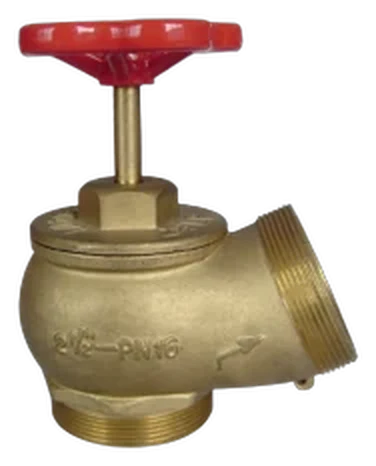
The outlets are the second point. The standpipe comes with DSP or Storz couplings, others on request. Belgian fire zones work with DSP and AR couplings, and brigades from the Netherlands, Germany and Luxembourg with Storz. Inside a building, the counterpart of the street hydrant is the wall hydrant: our brass landing valves have a 30° angle and come in 1 1/2, 2 and 2 1/2 inch. The article on dry risers and wall hydrants covers them.
One warning about vocabulary: in Flanders, "standpijp" also means the metered standpipe that a water company hires out for temporary water at an event or a small building site. The water company Farys describes it as an attachment with a tap and a water meter. That is a different product from the fire service standpipe in this article.
Send us the hydrant type, the main diameter on the sign and the couplings on your vehicles, and we will match the hydrant, the standpipe and the couplings.
Frequently asked questions
What is the difference between an above-ground and an underground hydrant in Belgium?
An above-ground hydrant (letter B on the sign) has fixed outlets with symmetrical couplings, so a hose connects directly. An underground hydrant (letter H) lies under a cover and has a bayonet coupling, on which the crew first mounts a standpipe. The Belgian circulars of 1975 and 1978 prefer the above-ground type.
What do the letter and the numbers on a Belgian hydrant sign mean?
The letter gives the type: H for an underground hydrant, B for an above-ground hydrant. The number after it is the inside diameter of the water main in millimetres, for example 100. The two figures below are distances in metres from the sign to the hydrant, one straight out from the sign and one sideways.
How much water does a hydrant deliver?
That depends on the main and on the pressure in the network. A rule of thumb from Luxembourg fire service training is 15 times the main diameter in millimetres for an above-ground hydrant and 10 times for an underground hydrant, in litres per minute. The Belgian circular of 14 October 1975 takes 1000 l/min for two hours as its principle.
May a suction hose be connected to a hydrant?
Not according to the ministerial circular of 9 March 1982, which forbids suction hoses for feeding a pump from an underground or an above-ground hydrant. Suction hoses are meant for open water such as a river or a pond.